You post the finished photograph. The light looks lovely, the colors work, and somebody asks what camera you used.
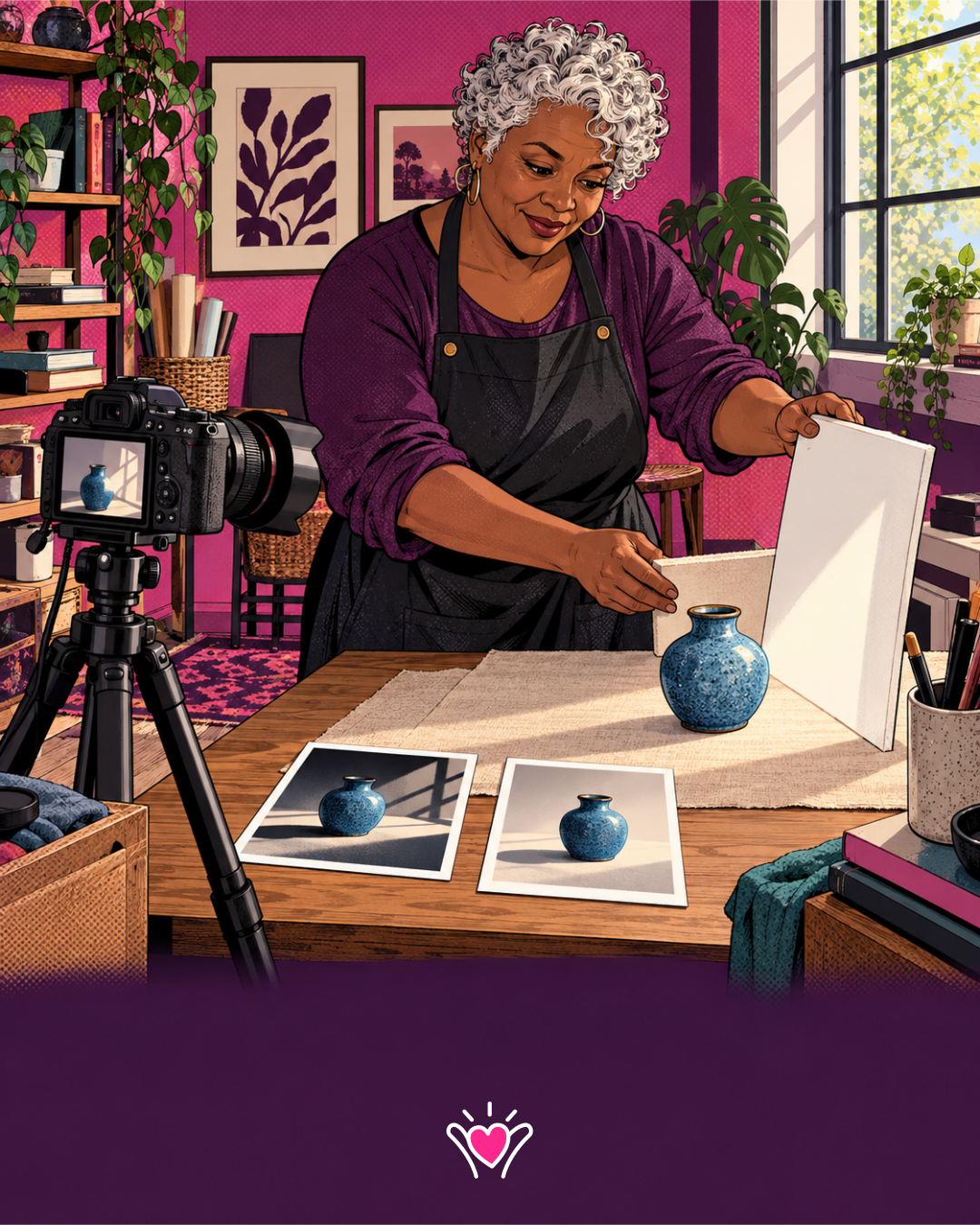
Fair question. But the camera didn't notice that the vase disappeared into the dark background. You did. Then you spent twenty minutes moving a piece of white cardboard around while your coffee went cold.
That part might be worth showing.
A finished piece lets people enjoy what you made. Explaining a choice gives them something they can try, look for, or pass along to a friend who's stuck on a similar problem.
Show what you were trying to solve
Say there's a photographer teaching people to shoot the things they make at home. She could post a list of her equipment. She could also put two photos of the same blue vase beside each other and explain why she brought a white card into the second shot.
"The shaded side was blending into the background. I wanted you to see the shape, so I bounced some window light back onto it."
Now the reader knows what she noticed and what she wanted to change. The comparison gives them somewhere to look. They don't have to take her word for it or own her camera to understand the choice.
This works beyond tutorials. A musician can explain why the drums drop out before a chorus. An illustrator can show why they removed a detail that was pulling attention away from a face. You're letting people into your taste, including the bits that took some arguing with yourself.
Leave room for a different answer
A useful explanation includes the situation. The photographer wanted the vase's shape to be clear. Another picture might need the heavy shadow. Neither choice becomes a rule for every photograph.
Tell people what mattered in this piece, what you tried, and what changed. If the comparison is a recreation, say so. You don't need to manufacture a dramatic failure or pretend you planned everything from the start.
And you don't owe anyone every unfinished file. Choose material you can share without exposing a client's work or someone else's private feedback.
Look through the work you've already made
Find a piece where a choice made a visible or audible difference. Put the alternatives beside each other, if you have them, and explain what guided you. Keep enough of the finished work in view that the explanation makes sense.
Your next post can come from the part you normally clear off the desk. Someone looking at the final photograph might still want the camera name. Now they'll also know why the cardboard was there.
Found this useful? Share it with another creator!